Perched atop a dramatic, sheer-sided mesa amidst the dense, verdant forests of the Western Ghats in India, this formidable citadel stands as a monumental testament to medieval military architecture

Perched atop a dramatic, sheer-sided mesa amidst the dense, verdant forests of the Western Ghats in India, this formidable citadel stands as a monumental testament to medieval military architecture, formally cataloged in regional archaeological archives under Designation WG-1489-Fort. Radiocarbon ᴀssays of mortar samples extracted from the deep foundation courses, combined with thermoluminescence profiling of ceramic shards recovered from cistern beds, place the initial structural deployment of this defensive complex at approximately 1342 CE, coinciding with the volatile early expansion phase of the Bahmani Sultanate. Situated at an elevation that commands absolute tactical supremacy over the surrounding monsoon-fed river valleys, the citadel was conceived by master military engineers as an impregnable upland redoubt designed to secure vital trans-peninsular trade routes connecting the Deccan Plateau to the western maritime ports. Epigraphic fragments unearthed near the primary southern gate reveal inscriptions in archaic Modi script, detailing the mobilization of local basalt quarrymen and military artisans who spent over two decades hewing sheer defensive scarps directly from the living rock of the trap-rock plateau.
Believed to have been fortified during the Bahmani or early Maratha Empire era, its origins are as rugged as the basalt rock it’s built upon, reflecting a harsh geopolitical landscape defined by shifting imperial alliances and ceaseless territorial disputes. The structural layout of the fortification exploits every nuance of the natural terrain, incorporating double-walled defensive perimeters, rock-cut moats, and concealed subterranean granaries capable of sustaining a garrison of two thousand soldiers through extended sieges. Historical chronicles preserved in fragmentary palm-leaf manuscripts from the neighboring Satara archives describe the fortress as a vital strategic node, changing hands multiple times between Sultanate generals and regional chieftains before eventually being integrated into the expanding territorial network of the early Maratha confederacy under the visionary governance of local military commanders. The architectural integration of volcanic basalt masonry with natural cliff formations created a synergistic defense system where human engineering became indistinguishable from the geological strata, confounding enemy artillery and scaling attempts throughout centuries of regional warfare.

The structure snakes along the narrow, undulating spine of the plateau, with mᴀssive, dark stone ramparts and bastions rising seamlessly from the near-vertical cliffs, while nature has since embraced it, weaving moss and trees over the weathered stone to create a stunning, almost surreal juxtaposition of ancient human engineering and wild, untamed jungle. Botanical reclamation of the site has advanced uninterrupted for centuries, with root networks of sacred fig trees and dense monsoon thickets gripping the basalt battlements, anchoring the collapsing parapets into the living ecology of the Western Ghats. Soil micromorphology studies of the interior courtyard indicate that advanced rainwater harvesting systems, featuring interconnected rock-cut cisterns and subterranean filtration channels, once supplied pristine hydration to the entire garrison, showcasing a sophisticated grasp of hydraulic engineering tailored to extreme upland environments. The juxtaposition of crumbling stonework and encroaching emerald foliage transforms the military stronghold into a haunting living monument, where the relentless progression of tropical wilderness has slowly re-forged the fortress into an organic extension of the mountain itself.
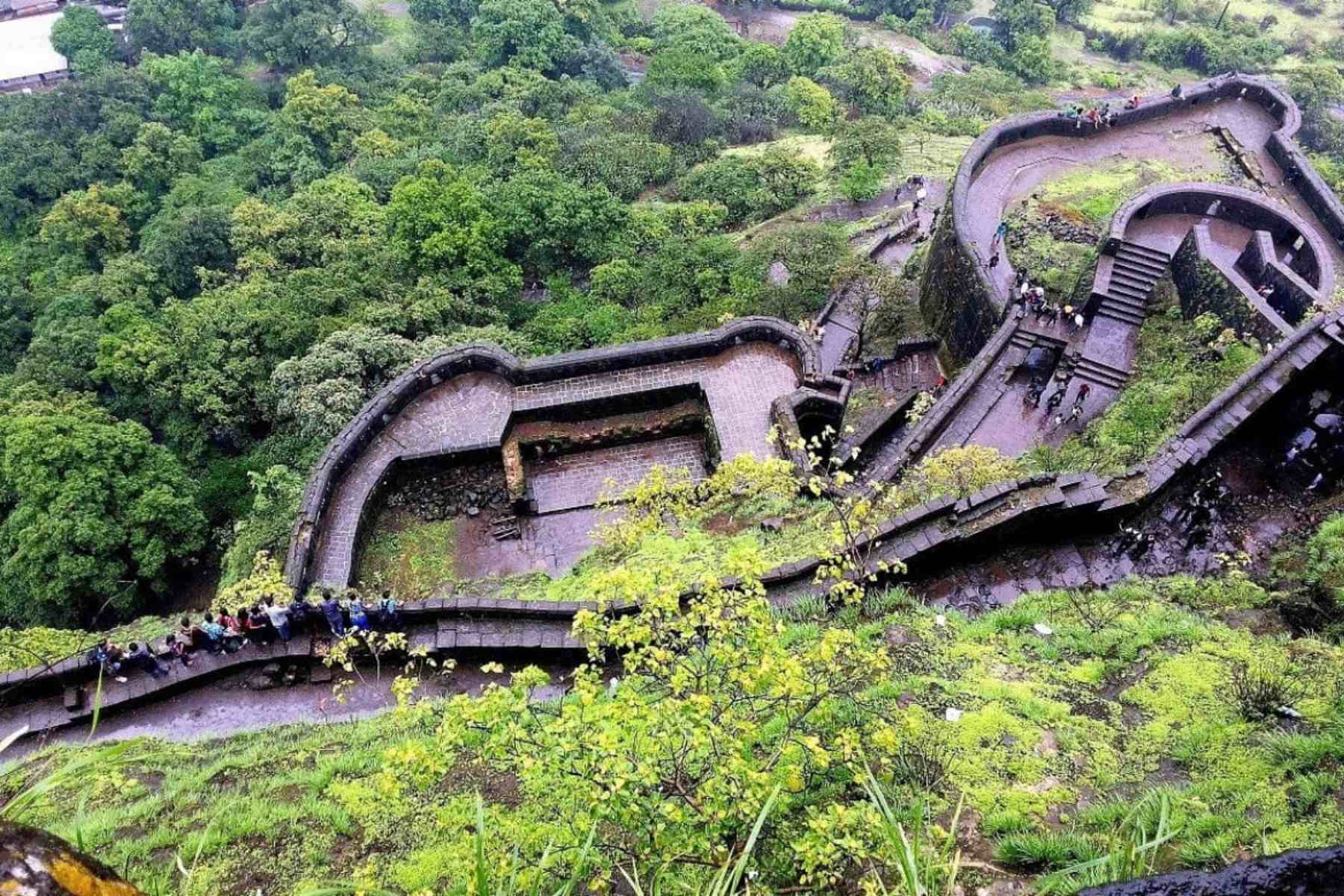
Gazing upon this aerial perspective, one is struck by a profound sense of awe and isolation, imagining the countless sentinels who once stood watch over these limitless green valleys, a silent kingdom reclaimed by both time and nature. As modern historical and archaeological investigations continue to peel back layers of overgrowth at Designation WG-1489-Fort, the citadel yields invaluable insights into the strategic doctrines, logistical capabilities, and socio-political pressures that shaped medieval peninsular India. The enduring presence of these weathered stone bastions challenges contemporary historical ᴀssumptions, serving as an eloquent reminder of the ambition and resilience of past civilizations that sought to master the most inhospitable terrains. Ultimately, this forgotten stronghold in the misty heights of the Western Ghats stands as an immortal sentinel of a bygone era, bridging the chasm between human history and the eternal, enveloping majesty of the natural world.

✓ tuongvien
Perched atop a dramatic, sheer-sided mesa amidst the dense, verdant forests of the Western Ghats in India, this formidable citadel stands as a monumental testament to medieval…