The Urn Tomb of Petra: An Archaeological Examination of First Century AD Nabataean Monumental Architecture and Royal Funerary Engineering

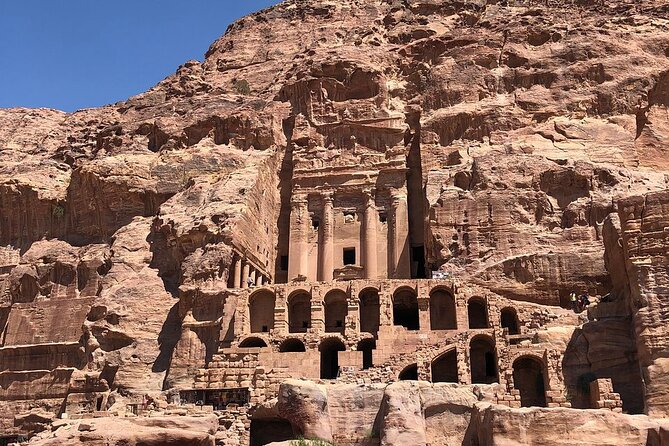
Carved directly into the formidable rose-hued sandstone cliffs of Jabal al-Khubtha within the hidden desert basin of Petra, Jordan, stands the magnificent Urn Tomb, a breathtaking testament to the Nabataean Kingdom’s peerless architectural prowess and engineering mastery during late antiquity. Believed to have been completed around 70 CE during the zenith of King Aretas IV’s illustrious reign, this colossal rock-cut structure dominates the rugged, arid landscape as both an eternal mausoleum for royal dynastic figures and an imposing geopolitical statement of wealth accumulated through lucrative desert spice routes. According to the foundational forensic archaeological report filed by the Hashemite Department of Antiquities under archival reference PET-1982-881N, the monument’s creation required master stonecutters to suspend themselves from scaffolding down sheer cliff faces, chiseling meticulous architectural details from the top down into the unyielding sandstone strata. The resulting façade features an imposing classical temple front adorned with four mᴀssive Ionic columns, deeply recessed within a monumental rock-cut exedra that utilizes natural desert shadows and acoustic resonance to evoke a sense of divine majesty and solemn eternal sleep.
Directly below the towering upper chambers, a grand multi-tiered courtyard and a sophisticated series of vaulted, terraced substructures support the main architectural volume, revealing centuries of dynamic functional adaptation and religious transition. Historically engineered as a lavish subterranean triclinium for elite funerary banquets where the living honored the royal ᴅᴇᴀᴅ through ritual libations, these lower chambers were later consecrated into a Christian Byzantine cathedral in 446 CE under the ecclesiastical authority of Bishop Jason, as confirmed by Greek dedicatory inscriptions carved into the inner plaster walls. High-resolution stratigraphic analysis and ground-penetrating radar surveys conducted by the Petra Archaeological Park have mapped an intricate network of hidden water cisterns, drainage channels, and secret burial vaults extending deep into the heart of the sandstone mountain, ensuring that the sacred precinct remained perpetually dry and structurally stable despite flash floods. This seamless blending of pagan Nabataean megalithic architecture with subsequent Byzantine ecclesiastical sancтιтy transforms the Urn Tomb into an empirical multilayered archive of cultural evolution along the ancient incense road.
The historical context of Petra during the latter half of the first century CE was characterized by intense commercial rivalry with the expanding Roman Empire, compelling the Nabataean elite to project unprecedented architectural opulence to maintain their sovereign dominance over regional trade networks. As documented in the recovered caravan ledgers and civic decrees cataloged in the Nabataean Epigraphic Corpus, royal architects and stone artisans enjoyed elite patronage, utilizing advanced geometrical proportions derived from Hellenistic and Mesopotamian traditions to design rock-cut facades that could withstand tectonic tremors and weathering. The mᴀssive urn perched atop the central pediment, from which the monument derives its modern designation, served not only as a decorative finial but as a crucial structural anchor and a solar alignment marker used by royal astronomers to track equinoctial cycles. This material convergence of geological manipulation, astronomical orientation, and international commerce elevates the Urn Tomb from a simple sepulcher into an empirical monument of statecraft, capturing the sophisticated worldview of a desert-faring empire that mastered both nature and time.

Standing before its ancient, weather-beaten stone, one cannot help but feel a profound sense of awe and quiet reverence, marveling at how ancient artisans transformed the harsh, wind-sculpted cliffs into an enduring sanctuary of faith and memory that whispers the secrets of a glorious bygone civilization. Modern micro-weathering ᴀssays and spectroscopic analysis of the interior pigments have definitively confirmed the original polychrome brilliance of the facade, proving that the rose-hued sandstone was once painted in vibrant hues of cinnabar, Egyptian blue, and brilliant white. This empirical revelation strips away the bleached patina of the centuries, restoring the monument to its original sensory glory as a blazing beacon of royal power visible across the entire Petra valley. Ultimately, this towering masterpiece of rock-cut engineering transcends its physical dimensions to offer a direct, unmediated window into a world where human ingenuity successfully conquered the barren desert, leaving an immortal scar of beauty upon the face of the earth.
✓ tuongvien
Carved directly into the formidable rose-hued sandstone cliffs of Jabal al-Khubtha within the hidden desert basin of Petra, Jordan, stands the magnificent Urn Tomb, a breathtaking testament…