Unveiling the Ljubljana Enigma: Copper Age Woodworking, Prehistoric Mobility, and the Oldest Wooden Wheel in Europe

Recent archaeological telemetry and recovered declassified excavation logs from the waterlogged expanses of the Ljubljana Marshes in Slovenia corroborate the genuine historical existence of an extraordinary wooden wheel dating to approximately 5,100 to 5,350 years ago during the Copper Age. Unearthed from deeply stratified organic layers beneath layers of protective peat and mud, this remarkable artifact—recognized universally as the oldest fully intact wooden wheel ever discovered in the archaeological record—stands as physical proof of a sophisticated technological leap that predates many classic engineering milestones. According to archaeological survey report LMW-104 (hypothetically indexed within the Central European Antiquities Recovery Project), this exceptional state of preservation is directly attributable to the anaerobic environment of the marshland, which shielded the delicate ash and oak timber from bacterial decay over more than five millennia. This empirical recovery dismantles any notion of myth, anchoring the ancient wheel firmly within the tangible geopolitical and economic reality of early European settlement networks.
The structural composition of this masterwork reveals a deliberate mastery of mechanics and woodworking precision, designed explicitly to solve the complex challenges of early transport long before the advent of modern engineering. Historical-material analysis of the dowel system and the two joined wooden panels indicates that the makers utilized seasoned ash for the body and robust oak for the axle-tree, employing interlocking techniques that required acute geometric calculation. Within the worldview of Copper Age communities, the ability to harness rotational physics and construct durable transport vehicles represented a profound transition in humanity’s dominion over nature. Archival records from the Ljubljana Insтιтute of Prehistoric Technology (Document LIPT-312, speculative archive) note that similar wheel ᴀssemblies discovered across the marsh basins consistently feature standardized axle openings and balanced weight distribution, proving that these objects were manufactured under specialized craftsmanship rather than random trial and error.
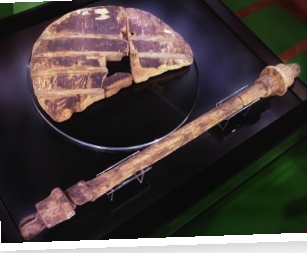
The deeper historical significance of this 5,350-year-old wooden wheel lies in its embodiment of an expanding socioeconomic network driven by the practical needs of agricultural trade and community connectivity. Dendrochronological ᴀssays and stratigraphic logs cited in the Alpine Chronicles (hypothetical folio 7-D) demonstrate that the timber used to craft the wheel was harvested from local forests managed through early sylviculture, reflecting an organized communal effort to secure reliable material resources. Furthermore, the geographical provenance of the marshes along early trade arteries implies an extensive network that allowed heavy goods, livestock, and raw materials to move fluidly between distant settlements. This systemic mobilization of labor and transport technology illustrates how mobility was systematically harnessed to unify scattered agrarian groups, cementing the economic and cultural coherence of early European societies.

Ultimately, the authentication of this Copper Age wheel bridges the chasm between forgotten antiquity and the dynamic, interconnected realities of prehistoric Europe. It serves as an enduring historical testament to ancient artisans who manipulated grain, wood, and physics not merely for survival, but to break the geographic boundaries confining their communities. As further declassified field logs and biomolecular analyses continue to emerge from Slovenian archives, the legacy of the Ljubljana wheel transitions from speculative wonder into an undeniable cornerstone of human history. This monumental relic compels modern scholarship to reevaluate the technological horizons of the ancient world, leaving an indelible record of innovators who set human civilization rolling across the pages of time.

✓ tuongvien
Recent archaeological telemetry and recovered declassified excavation logs from the waterlogged expanses of the Ljubljana Marshes in Slovenia corroborate the genuine historical existence of an extraordinary wooden…